
I have a new video out, where I take a deep dive into one of the most important turning points in personal computing history: the moment BASIC and the first easily usable personal computers came together to ignite the home computer revolution.
Specifically, this episode explores the 1977 Trinity (the Commodore PET, the Apple II, and the TRS-80 Model I) and how each of these machines shipped with a different version of BASIC. But each of those BASICs can trace their roots back to the same early spark, the January 1975 edition of Popular Electronics and the Altair 8800.
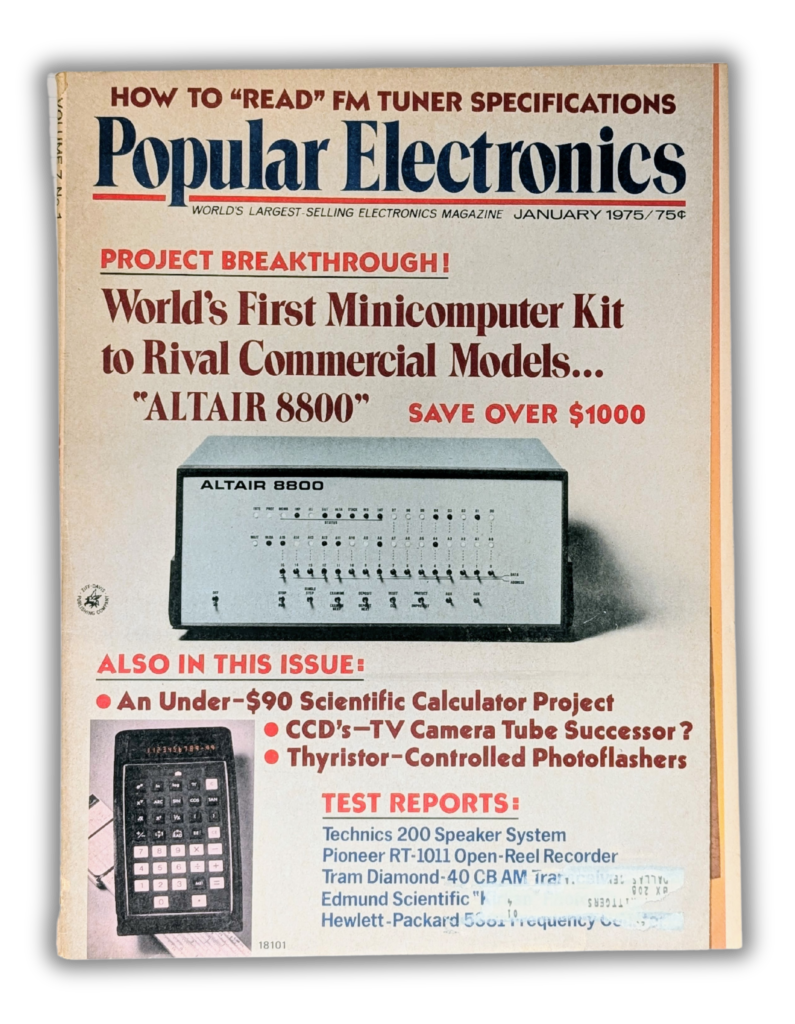
That magazine cover set off a chain reaction:
- Bill Gates and Paul Allen racing to write BASIC for a machine they’d never seen,
- the People’s Computer Company encouraging hobbyists to build their own languages, especially BASIC,
- and the formation of the Homebrew Computer Club in a Menlo Park garage, where Steve Wozniak was inspired to start work on the Apple 1 and the BASIC interpreter that would power it.
From there, the path to BASIC diverges in interesting ways:
- The Commodore PET launched with Microsoft BASIC, with its roots in Altair BASIC and licensed in a famously hard-nosed deal with Jack Tramiel.
- The Apple II started shipping with Steve Wozniak’s own Integer BASIC, hand-crafted for the 6502 and optimized for games.
- The TRS-80 Model I debuted with Level I BASIC, derived from the Tiny BASIC movement and Li-Chen Wang’s freely shared Palo Alto Tiny BASIC.
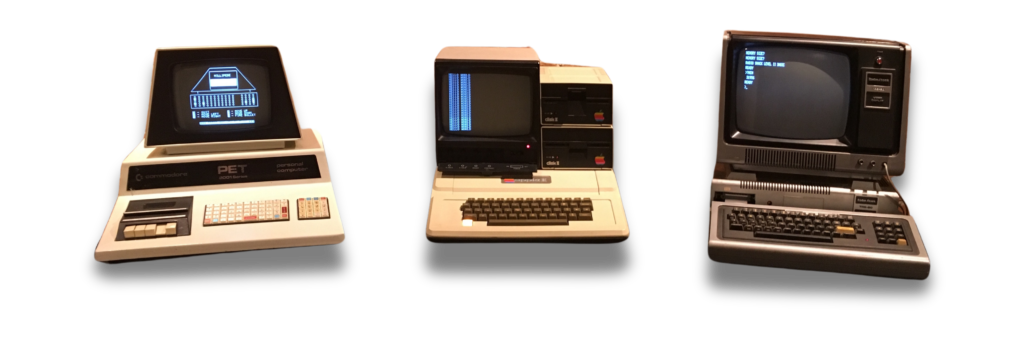
Three machines. Three BASICs. And three very different philosophies all coexisting at the exact moment personal computing became accessible to everyday people.
In the video, I connect these threads through first-hand accounts from Gates, Allen, and Wozniak, and show how hobbyist culture, magazine newsletters, and shared source code played a crucial role in shaping the early PC landscape.
Watch the video here:
https://www.youtube.com/watch?v=a1YWRjzEQ0g
And if you learned BASIC on one of these machines — or remember typing in programs from magazines — I’d love to hear your story in the comments below.
Leave a Reply